


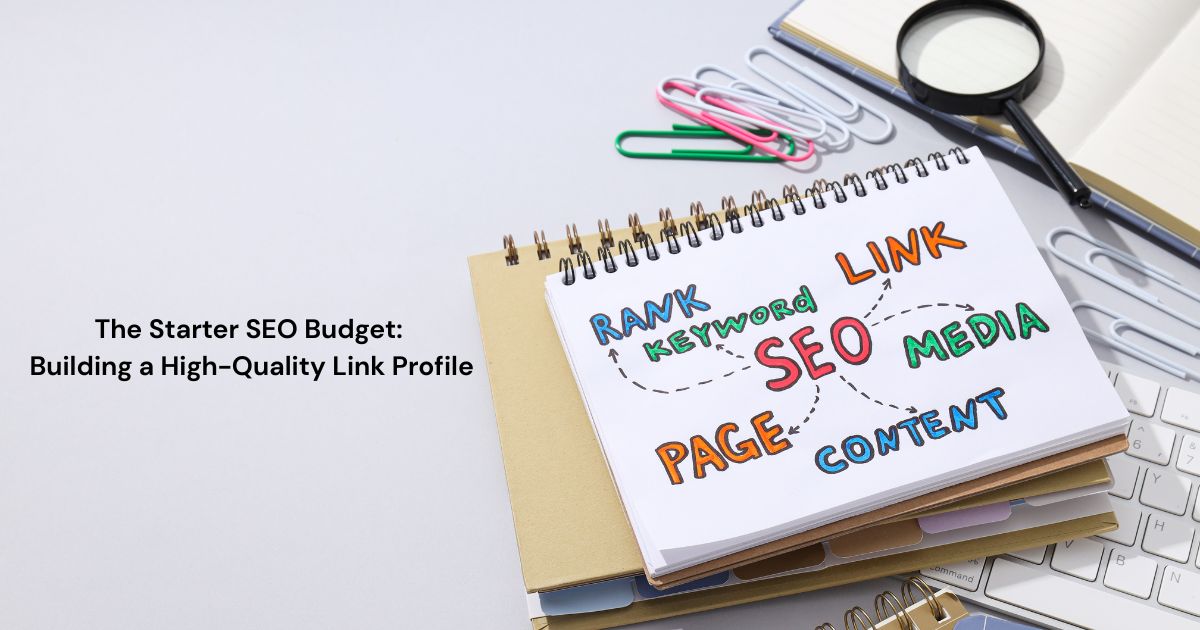
The Starter SEO Budget: Building a High-Quality Link Profile on a Tight Small Business Budget
Introduction: Link Building Doesn’t Require a Fortune
For small businesses (SMBs) and startups, the myth persists that effective SEO and link building require massive budgets. You see competitors landing links on Forbes and TechCrunch, and you assume you can’t compete. This isn’t true.
While enterprise budgets can buy speed and volume, a small business can build a superior high-quality link profile through strategic focus, creativity, and efficient spending. The secret is shifting from a quantity-based strategy to a quality-focused link building approach.
This guide provides the ultimate Starter SEO Budget playbook, focusing on three high-impact, cost-effective strategies to secure valuable backlinks that actually move the needle for your business.
1. Phase 1: The Cost-Effective Foundation (Free & Low-Cost)
Before spending a dime on premium placements, secure all the foundational links you can control. These are the building blocks of your initial link profile.
- Local & Niche Directories (Low Cost): Ensure you are listed on Google My Business, relevant local chambers of commerce, and high-authority industry-specific directories (e.g., Clutch for B2B, Houzz for home services). Many niche directories offer free or very low-cost annual listings.
- SEO Keyword Focus: Local SEO, Niche-Relevant Links
- Competitor Backlink Analysis (Free Tools): Use free tools like Google Search Console or trial versions of paid tools (Ahrefs, SEMrush) to identify the sites linking to your top two competitors. Prioritize links that come from resource pages or simple listings—these are often easy to replicate with a simple outreach email.
- Reclaiming Unlinked Mentions (Free): Use Google Alerts to monitor your brand name. If a site mentions your brand but doesn’t link to you, simply email them with a polite request to turn the mention into a hyperlink. This is the highest-ROI, lowest-cost link acquisition tactic.
2. Phase 2: Strategic Link Acquisition (Efficient Budgeting)
When you’re ready to allocate a small budget (e.g., $500-$1,500/month), focus every dollar on maximizing quality, not volume. This is where a budget-friendly, transparent link building service like LinqBuilder becomes invaluable.
| Strategy | Budget Focus | Why It Works for SMBs |
| High-Value Guest Posting | Cost-Per-Link | Instead of buying 10 low-quality links, buy 2-3 high-quality backlinks on highly relevant industry blogs. Prioritize niche-relevant guest posting over high-DA generic sites. |
| The ‘Resource Page’ Outreach | Time/Labor Cost | Find established industry resource pages (e.g., “Best Tools for Small Business Marketing”) and offer your service as a useful addition. These pages are high-authority and typically have high traffic. |
| Broken Link Building (Manual Outreach) | Time/Labor Cost | Find resource pages in your niche that link to outdated or broken content. Create a superior piece of content to replace the dead link, and pitch it to the site owner. This is time-consuming but highly effective. |
Budgeting Tip: Always demand a transparent cost-per-link breakdown. Never pay for a vague “package” that hides the true quality of the domain. You must be sure every dollar is going toward a domain that offers real organic traffic and relevance.
3. Phase 3: Content as an Asset (The Long-Term Win)
The most sustainable way to build links on a tight budget is to attract them naturally. This means dedicating a portion of your budget to creating truly “linkable assets.”
- Original Data and Case Studies: Small businesses have unique, real-world data. Publish a simple but effective industry survey or a case study detailing a massive win (e.g., “How We Increased Lead Flow by 40% on a $100 Budget”). Original data is currency for journalists and bloggers.
- The Ultimate Guide/Tool: Invest time in creating one single, definitive guide or a simple, free online tool (like a calculator or checker). These assets naturally attract editorial links from other sites looking to reference a comprehensive resource.
Conclusion: Quality Over Quantity Wins the SEO Race
Building a powerful link profile on a Starter SEO Budget is entirely possible by being smart, not rich. Focus your limited budget on the fundamentals (reclaiming mentions, optimizing directories) and then allocate your spend towards a few highly niche-relevant placements.
By prioritizing transparency, quality, and creative content assets, you can compete with the giants and build an enduring, penalty-proof link profile that fuels your small business growth.
Ready to maximize your small business link building budget?
Frequently Asked Questions (FAQ)
Q1: What is the biggest mistake small businesses make with their SEO link building budget?
A: The biggest mistake is prioritizing quantity over quality. Small businesses often chase cheap, bulk links that offer minimal SEO value and high risk of being spammy (like PBNs). A Starter SEO Budget should be focused on securing 2-3 high-quality backlinks and foundational links, rather than 20 low-quality ones.
Q2: What are “foundational links” and where should I get them first?
A: Foundational links are the essential, low-cost or free links that establish your business’s presence and initial authority. You should get them first from platforms you control, such as Google My Business, relevant industry-specific directories (like Yelp or industry associations), and by implementing local and niche directory listings.
Q3: How can I perform a basic competitor backlink analysis for free?
A: You can use Google Search Console to see who is linking to your own site. To find competitor links, you can use free trial periods or limited free versions of tools like Ahrefs, Moz, or SEMrush. Focus on identifying resource pages or simple listings on high-authority sites that are easy to replicate via a simple outreach email.
Q4: Why should a small business prioritize Niche-Relevant Guest Posting over High-DA generic sites?
A: While High-DA (Domain Authority) generic sites offer powerful link juice, niche-relevant guest posting is more effective for a tight budget because it drives highly qualified, converting traffic. It also signals stronger, more relevant authority to Google for your specific topics, which is crucial for rising in specialized search results.
Q5: What is a “linkable asset,” and how does it help a tight budget?
A: A linkable asset is a piece of content, such as original research, unique data, a comprehensive guide, or a free online tool, that naturally attracts editorial links from other websites. Investing your content budget into one great linkable asset is a long-term, scalable, and highly cost-effective way to acquire high-quality links passively.