



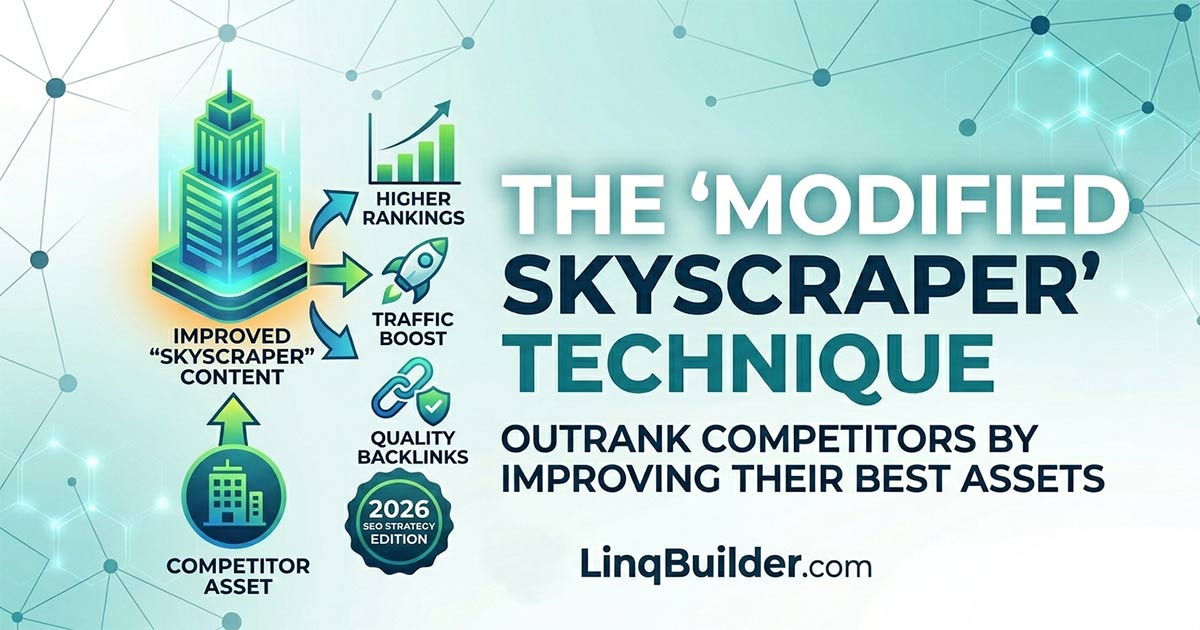
In the aggressive SEO landscape of 2026, standard content isn’t enough to move the needle. To claim the top spot, you need to systematically dismantle your competitors’ rankings. Enter the “Modified Skyscraper” Technique.
While the original Skyscraper method focused purely on length, the Modified Skyscraper a core strategy at prioritizes Information Gain, user intent, and Generative Engine Optimization (GEO).
The original Skyscraper Technique was simple: find high-performing content, write something longer, and steal the links. But in 2026, search engines are smarter. They don’t want “longer”; they want better.
Here is how to use the Modified Skyscraper to dominate your niche.
1. Identify the “Vulnerable” Leader
Your first step is finding a competitor who is ranking well but is “vulnerable.” A vulnerable asset is content that ranks highly but suffers from:
- Outdated Data: References to 2023 or 2024 trends.
- Poor UX/UI: Slow loading times or intrusive ads.
- Surface-Level Depth: It answers what a concept is, but not how to implement it.
2. The Three Pillars of Improvement
To “out-skyscraper” a competitor in 2026, you must improve their asset in three specific dimensions:
A. Information Gain (The AI Requirement)
Search engines now reward content that adds new info to the web’s collective knowledge.
- Add Proprietary Data: Include original surveys or internal case studies.
- Unique Visuals: Replace generic stock photos with custom diagrams or infographics that explain complex concepts.
B. “Answer-First” Architecture
AI Overviews prioritize content that is easy to synthesize.
- The Summary Block: Start your post with a clear, 50-word definition of the topic.
- Comparison Tables: If your competitor has a list, turn it into a high-value comparison table.
C. Enhanced E-E-A-T
Google prioritizes Experience and Expertise.
- Expert Quotes: Don’t just state facts; include insights from your in-house specialists.
- Human Connection: Align your tone with a modern editorial direction that feels personal rather than clinical.
3. The “Entity-Based” Outreach Strategy
The “Modified” part of this technique extends to how you build links. Instead of mass-emailing every site that linked to the original, you target relevant entities.
- Topical Alignment: Only reach out to sites that are contextually related to your niche.
- The “Gap” Pitch: Don’t just say your post is “better.” Point out exactly what the competitor’s post is missing and why your updated version provides more value to their readers.
- Manual Precision: In an AI-saturated market, a handcrafted pitch to an editor is 10x more effective than a thousand automated emails.
4. Measuring the “Leapfrog” Effect
Success isn’t just a ranking; it’s a “leapfrog.” Use tools to monitor:
- Keyword Movement: Track your climb as you displace the competitor.
- AI Citations: See if Google’s AI Overview starts citing your “Information Gain” points instead of the competitor’s generic ones.
FAQs’
Q: Is the original Skyscraper Technique dead?
A: It’s not dead, but it has evolved. Length alone is no longer a ranking factor. You must now focus on providing unique value (Information Gain) and a better user experience.
Q: How long does it take to see results?
A: Depending on the niche’s competitiveness, you can see ranking movements in 4–8 weeks after your new asset is indexed and your outreach begins.
Ready to leapfrog your competition? Don’t settle for being second best. At LinqBuilder, we use data-driven Modified Skyscraper tactics to build your authority and secure the #1 spot. Contact us today to start your climb.