


Niche Authority: Why Relevance Beats Domain Authority for Modern SEO
Introduction
In the 2025 SEO landscape, the debate between domain authority and niche authority has become more than an academic argument it’s now a deciding factor in which websites climb Google’s ranks, attract loyal audiences, and generate sustainable revenue. As Google’s algorithm continues to prioritize topical expertise and user satisfaction, building deep relevance within a focused niche consistently outperforms strategies based solely on high domain authority. This new reality is changing how digital marketers, bloggers, and business owners set their SEO priorities for lasting success.
What is Domain Authority? (DA)
Domain Authority (DA) is a proprietary metric developed by Moz to predict how likely a website is to rank on search engines. DA scores range from 1 to 100 and are influenced by factors such as backlink profiles, domain trust, age, and site structure.
Key facts:
- DA is not a direct Google ranking factor, but is widely used as an SEO benchmarking tool.
- Higher DA usually means better potential for ranking, especially for competitive keywords.
- DA can be improved by acquiring more high-quality backlinks, strengthening internal linking, and maintaining a technically strong website.
What is Niche Authority (Topical Authority)?
Niche authority (often called topical authority) refers to your website’s perceived expertise and depth within a specific subject or vertical.
How it works:
- Search engines now evaluate how comprehensively your site covers a particular topic.
- Clusters of deeply interconnected content pillar articles, how-to’s, case studies, and related blog posts signal to Google that your website is a trusted resource in your chosen niche.
- Topical authority is built by consistently providing high-quality, relevant, and fresh information for a well-defined audience.
Why Niche Authority Outranks Domain Authority in 2025
1. Google Now Ranks By Intent, Depth, and Relevance
- Search algorithms measure how well your content matches the user’s search intent, especially for long-tail or specific queries.
- A small site with deep topical coverage can outrank much larger competitors by building out clusters and answering related user questions in detail.
- Example: A niche site focused exclusively on “sustainable pet food” can outperform multinational pet retailers on relevant queries if its content is more comprehensive and up to date.
2. Modern Link Building Favors Relevance, Not Just Raw Metrics
- Inbound links from niche-relevant, trustworthy sources pass more ranking power than unrelated, high-DA domains.
- Quality over quantity matters: A single link from an industry leader in your space beats 10 random links from unrelated generalist domains.
3. User Experience Signals Center on Expertise
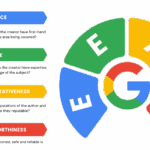
- Google’s E-E-A-T (Experience, Expertise, Authoritativeness, Trustworthiness) guidance rewards in-depth, well-structured, and audience-focused content.
- Niche sites that answer specific user questions, organize content into logical clusters, and demonstrate first-hand experience will rank higher and attract better engagement.
- These metrics (bounce rate, dwell time, pages per visit) reinforce your topical authority in Google’s eyes.
How To Build Niche Authority in 2025 (Step-by-Step)
1. Choose and Define Your Niche
- Use data tools to identify low-competition, high-intent subtopics within your broader industry.
- Prioritize areas where you have expertise, passion, or unique access to information.
2. Create Topic Clusters and Pillar Content
- Develop “pillar pages” in-depth, comprehensive guides targeting broad keywords (e.g., “Complete Guide to Vegan Skincare”).
- Build supporting blog posts answering every conceivable related question users might ask (“Are vegan skincare products safe for acne-prone skin?”).
- Interlink all related content so users (and Google) can easily navigate across the cluster.
3. Target Niche-Relevant Backlinks
- Prioritize outreach to thought leaders, forums, and communities in your space.
- Guest post on related websites and include authoritative references to your own content.
- Quality and context always matter more than quantity.
4. Demonstrate Real-World Expertise and Experience
- Share unique case studies, data, original research, or hands-on tutorials.
- Update existing content to reflect trends, Google’s guidelines, and evolving user questions.
5. Monitor and Optimize Content Regularly
- Use analytics to track which topics and clusters attract the most engaged traffic.
- Continually refresh and expand high-performing pages for deeper coverage.
When Does Domain Authority Still Matter?
- DA is valuable for benchmarking against competitors, estimating SEO potential, and qualifying sites for backlink opportunities.
- High DA can help new or thin content gain traction faster, but this is temporary unless it’s supported by strong, relevant, authoritative material.
- Google still uses signals that often correlate with DA: site age, trustworthiness, technical SEO, and powerful backlinks.
Case Study: Niche Relevance in Action
A small independent news blog focusing exclusively on renewable energy trends in India consistently outranks mainstream news sites for high-value keywords. Why? Its in-depth coverage, original reporting, and active engagement with influencers in the green energy space rather than a broad, generic content approach allows it to outperform competitors with domain authority scores 40–60 points higher.
Integrating Both: Best Practices for Modern SEO
- Balance efforts between growing topical authority and steadily improving DA; don’t ignore one for the other.
- Build authority around a select group of topics, then branch outward as you become THE resource for your niche.
- Anchor content around user needs and real-world expertise, not just keywords or DA metrics.
Conclusion
Modern SEO is no longer a contest of raw domain authority; it’s a test of focused expertise, deep content clusters, and genuine relevance for targeted users. In 2025, building niche (topical) authority delivers more sustainable rankings, higher engagement, and better ROI than chasing broad, domain-wide metrics alone. Prioritize depth, relevance, and semantic connections and watch your site become Google’s preferred answer for your specialty.
FAQ Section
What is niche authority in SEO?
Niche authority (or topical authority) describes a website’s deep expertise and comprehensive coverage of a specific subject area, making it the go-to resource for users and search engines.
How does niche authority differ from domain authority?
Domain authority is a general measure of site strength based mostly on its backlink profile and technical factors. Niche authority focuses specifically on relevance and depth within a tightly focused topic or industry.
Why does Google favor relevance over domain authority in 2025?
Modern search algorithms prioritize relevance and user intent, rewarding sites that best answer specific queries—even if those sites have lower domain authority scores than generalist competitors.
Can a niche site outrank high DA competitors?
Yes, a niche site can outrank larger competitors for targeted keywords by publishing interconnected, authoritative content that aligns closely with search intent and audience needs.
How can I build topical authority for my website?
Create topic clusters, develop pillar pages, produce in-depth articles covering every related subtopic, and earn niche-relevant backlinks to signal expertise to both users and Google.
Does domain authority still matter for SEO?
Domain authority is useful for benchmarking, evaluating competitors, and tracking backlink health, but it cannot substitute for the highly relevant, in-depth coverage required to achieve topical authority and modern rankings.